Back to Articles
Share it


August 30, 2021
As a small business owner, you want to know how your website is performing and whether or not you are effectively generating new leads . An easy way to monitor...

Lorem ipsum dolor sit amet, consectetur adipiscing elit, sed do eiusmod tempor incididunt ut labore et dolore magna aliqua. Ut enim ad minim veniam, quis nostrud exercitation ullamco laboris nisi ut aliquip ex ea commodo consequat. Duis aute irure dolor in reprehenderit in voluptate velit esse cillum dolore eu fugiat nulla pariatur.
Block quote
Ordered list
Unordered list
Bold text
Emphasis
Superscript
Subscript
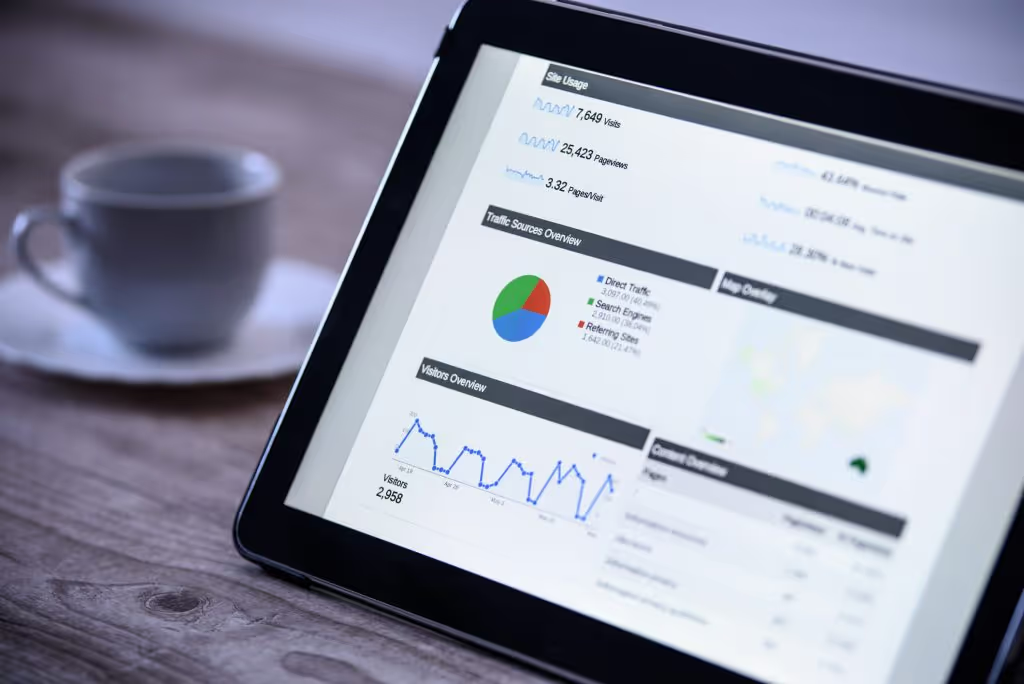

As a small business owner, you want to know how your website is performing and whether or not you are effectively generating new leads. An easy way to monitor your website data and turn that data into valuable insights is by using Google Analytics.Google Analytics is a free tool that helps make sense of your website data and optimize its performance. When a user visits your webpage, it triggers a combination of javascript and cookies. This interaction is then reported to Google which sends the data to your Google Analytics account where you can then analyze the information. The reporting features and insights can help to determine the success of marketing campaigns, trends in user engagement, and individual page traffic so you can improve user experience and brand awareness.Follow these steps to get started with Google Analytics:
To begin, create your Google Analytics account by going to google.com/analytics and follow the instructions. It will ask you to either create a new account or use an active Google account to link to your analytics dashboard. Input your data sharing preferences and your business details, including the name of your business and website URL.
After setting up your account, you will receive a tracking code that is unique only to your website for collecting data. You will need to add this code either manually to your website by inputting the tracking code onto each webpage (—often completed by a developer on the backend of your site), or if you are using a WordPress website you can install the Google Analytics plugin that does all the hard work for you.Once you have this complete, verify that Google is reporting your data. Keep in mind that it may take a couple days for this information to populate on your analytics account.
These may change over time, and that’s okay, but you need to tell Google exactly what the key performance indicators are for your business. You can find the Goals dashboard by visiting Admin in the bottom left corner of the home page. Setting these will help contribute to the success of your website and uncover areas that need improvement.
If you don’t already have an account, visit search.google.com to register, then visit Property Settings on Google Analytics to find the Search Console options which will link the two together. This will send your SEO results directly to Google Analytics which gives you access to even more data and allows you to monitor your rankings and uncover indexing problems.
Google Analytics is a powerful tool, but most small businesses aren’t using it’s features to their full advantage. Here are some additional features you have access to that will help you get the most out of your reporting:
Google Analytics can seem a little complex if you are just beginning to use its features, but the insights you gain from using this tool is well worth the effort! And the good news, the experts at UpSwell have industry-specific expertise and are happy to help guide you to improving your site’s performance and optimizing your marketing efforts. Contact us today for a free marketing assessment!
As a small business owner, you want to know how your website is performing and whether or not you are effectively generating new leads . An easy way to monitor...

As a small business owner, you want to know how your website is performing and whether or not you are effectively generating new leads. An easy way to monitor your website data and turn that data into valuable insights is by using Google Analytics.Google Analytics is a free tool that helps make sense of your website data and optimize its performance. When a user visits your webpage, it triggers a combination of javascript and cookies. This interaction is then reported to Google which sends the data to your Google Analytics account where you can then analyze the information. The reporting features and insights can help to determine the success of marketing campaigns, trends in user engagement, and individual page traffic so you can improve user experience and brand awareness.Follow these steps to get started with Google Analytics:
To begin, create your Google Analytics account by going to google.com/analytics and follow the instructions. It will ask you to either create a new account or use an active Google account to link to your analytics dashboard. Input your data sharing preferences and your business details, including the name of your business and website URL.
After setting up your account, you will receive a tracking code that is unique only to your website for collecting data. You will need to add this code either manually to your website by inputting the tracking code onto each webpage (—often completed by a developer on the backend of your site), or if you are using a WordPress website you can install the Google Analytics plugin that does all the hard work for you.Once you have this complete, verify that Google is reporting your data. Keep in mind that it may take a couple days for this information to populate on your analytics account.
These may change over time, and that’s okay, but you need to tell Google exactly what the key performance indicators are for your business. You can find the Goals dashboard by visiting Admin in the bottom left corner of the home page. Setting these will help contribute to the success of your website and uncover areas that need improvement.
If you don’t already have an account, visit search.google.com to register, then visit Property Settings on Google Analytics to find the Search Console options which will link the two together. This will send your SEO results directly to Google Analytics which gives you access to even more data and allows you to monitor your rankings and uncover indexing problems.
Google Analytics is a powerful tool, but most small businesses aren’t using it’s features to their full advantage. Here are some additional features you have access to that will help you get the most out of your reporting:
Google Analytics can seem a little complex if you are just beginning to use its features, but the insights you gain from using this tool is well worth the effort! And the good news, the experts at UpSwell have industry-specific expertise and are happy to help guide you to improving your site’s performance and optimizing your marketing efforts. Contact us today for a free marketing assessment!
No pressure. No obligation. Just an honest assessment of your market, your opportunity, and the approach that fits.
What You Get